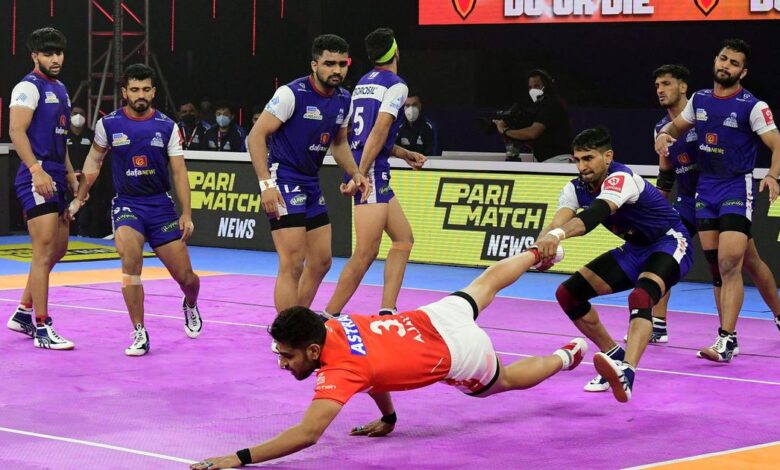
Prologue — Where Breath Meets Earth
The sun dips low over the mustard fields of Haryana. A light breeze stirs the dust, carrying with it the sound of rhythmic chants: “Kabaddi, kabaddi…” It’s dusk — that magical hour when India transforms from day’s bustle into twilight’s ritual. Under a fading orange sky, barefoot boys chase, tackle, and tumble, their laughter echoing across the plains. The game may look simple to an outsider — a sport of tags and tackles — but to India, Kabaddi is something far more profound. It’s breath. It’s spirit. It’s survival.
To a foreign traveler, Kabaddi is not just a sport to watch — it’s a doorway into India’s living pulse. It’s where athleticism meets mindfulness, where ancient village rituals collide with LED-lit modern stadiums, and where the timeless rhythm of breath still governs the outcome of every match. This is a journey not just into a game, but into India’s soul.
1. The Game That India Breathes
Before cricket, before Bollywood, before yoga became a global phenomenon — there was Kabaddi. Rooted in over 2,500 years of history, Kabaddi is India’s oldest indigenous sport, a blend of strategy, stamina, and spirit. The premise is simple: one player, one breath, one mission — cross the line, tag opponents, and return before being caught.
The Philosophy of the Breath
For the Indian mind, breath (known as prana) is life itself. In Kabaddi, that philosophy takes form. The raider must hold his breath while chanting “kabaddi” — a living mantra, an echo of ancient yogic disciplines. The game becomes meditation in motion. The body exerts; the mind remains still.
Every raid is a metaphor for existence itself: to step into the unknown, confront opposition, and return — wiser, bruised, but victorious.
2. From Krishna’s Fields to the Global Stage
Kabaddi’s mythology often ties back to the playful yet profound spirit of Lord Krishna, who was said to have played similar games with the gopis in Vrindavan. Over time, the game became part of India’s cultural fabric, played in temple courtyards, dusty fields, and school grounds.
In Tamil Nadu, it appeared in Sangam literature as Sadugudu — a contest of endurance and breath control. In Punjab, it became Circle Kabaddi, emphasizing raw strength and grappling. By the early 20th century, regional associations began formalizing rules. When India hosted the 1951 Asian Games, Kabaddi made its first formal appearance on an international platform. In 1990, it became an official medal sport.
The Modern Renaissance
In 2014, the Pro Kabaddi League (PKL) changed everything. With dazzling lights, celebrity owners, and broadcast deals, Kabaddi transformed from a rural pastime to a national obsession. Today, PKL teams like the Jaipur Pink Panthers and Patna Pirates have fan bases as passionate as any football club. What was once a game of the fields now echoes through arenas and smartphones.
3. Regional Flavors: The Many Faces of Kabaddi
Traveling through India, you realize Kabaddi isn’t one game — it’s many, each region lending its flavor, tempo, and soul.
Tamil Nadu — Sadugudu, the Ancient Pulse
Here, Kabaddi is still played barefoot on red soil. Matches erupt after harvest, under the glow of festival lanterns. For locals, it’s not just sport — it’s heritage. Elders narrate tales of heroes who could raid entire teams without losing breath.
Punjab — The Power Circles
Circle Kabaddi is not for the faint-hearted. Played on a circular field, it’s one-on-one combat — part sport, part showdown. The crowd’s energy rivals a rock concert. During the annual World Kabaddi Cup in Moga or Bathinda, villages turn into carnival grounds. Music blares, flags wave, and players dive with the ferocity of warriors.
Bengal and Bangladesh — The People’s Kabaddi
In Bengal and Bangladesh, Hadudu brings entire communities together. It’s fast, rhythmic, and played in the paddy fields after monsoon harvest. The game ends with laughter, songs, and shared food — a true celebration of life.
Maharashtra & Haryana — The Heart of Modern Kabaddi
These states are the sport’s powerhouses. Haryana’s academies produce India’s national champions, while Maharashtra pioneered the mat-based, standardized version used internationally.
“Kabaddi is not learned,” says Coach Rajbir Singh from Sonipat. “It’s inherited — like breath.”
4. The Inner Game: A Lesson in Mindfulness and Strategy
To the untrained eye, Kabaddi looks chaotic — players tumbling, tackling, shouting. But at its core, it’s a dance of mindfulness. Raiders must maintain breath awareness while analyzing defenders’ positions and predicting movements. Defenders, in turn, synchronize their timing and trust.
The chant “kabaddi” serves a dual purpose — proof of continuous breath and a meditative anchor. Lose your focus for a second, and you lose your breath — and the game.
For the traveler familiar with yoga or meditation, Kabaddi reveals a familiar truth: control over one’s breath is control over one’s fate.
5. Inside the Arenas: The Pro Kabaddi Experience
If you want to witness modern India in full rhythm, attend a Pro Kabaddi League match. The energy is electric. Floodlights blaze. Fans wave neon posters. Drums echo like thunder.
Travel Tip: Book tickets early through BookMyShow or the official PKL website. Cities like Mumbai, Chennai, and Bengaluru host the largest games. Seats near mid-court offer the best view of both raids and tackles.
What to expect:
- Duration: 40 minutes, two halves of 20 each.
- Teams: 7 players each, with rolling substitutions.
- Scoring: Points for tags, tackles, and “all-outs.”
The announcer’s voice rises above the din: “Bonus point! Super tackle! All out!” You’ll find yourself shouting along, even if you barely know the rules.
6. Meeting the Players: Stories from the Soil
Behind every star is a story that humbles and inspires.
The Farmer’s Son: Deepak Hooda, from Rohtak, once balanced farming by day and Kabaddi by night. His journey from village tournaments to captaining the Indian national team mirrors India’s dream itself — persistence and possibility.
The Trailblazer: Payel Chowdhury, from Bengal, broke gender stereotypes to represent India internationally. “They said Kabaddi wasn’t for girls,” she smiles, “so I played harder.”
The Mentor: Coach Manpreet Singh trains children in Ludhiana. “Kabaddi teaches life,” he says. “Fall, rise, repeat. That’s all it takes.”
7. Experiencing Kabaddi as a Traveler
Where to Go
- Haryana: Visit the sports academies of Sonipat or Hisar.
- Punjab: Attend the Circle Kabaddi World Cup (October–December).
- Tamil Nadu: Catch a Sadugudu match during Pongal (January).
- Maharashtra: Watch school and college tournaments in Pune or Nagpur.
How to Attend
- Ask locals — they’ll guide you to community matches.
- Dress comfortably; sit on the sidelines with villagers.
- Join the cheers; locals love when foreigners participate.
When to Visit
- Pro Kabaddi League: July–October (major cities)
- Rural tournaments: December–March (after harvest)
8. The Festivals of Strength: Where Sport Meets Spirit
Kabaddi isn’t confined to stadiums — it lives in India’s festivals. During Baisakhi in Punjab, Pongal in Tamil Nadu, and Makar Sankranti in Gujarat, the sport takes center stage.
Drums, folk dances, and food stalls create a carnival-like setting. The air smells of jaggery and fried snacks. Families sit together, cheering for their village teams. As night falls, floodlights flicker, and the field becomes a stage — the heart of India beating under starlight.
9. Women and Kabaddi: A Quiet Revolution
Women’s Kabaddi is India’s silent storm. From Haryana to Kerala, young women are claiming the field. The Women’s Pro Kabaddi League (in planning) promises to bring their stories to the forefront.
“Playing Kabaddi gave me a voice,” says Kavita Devi, a national player. “When you learn to tackle on the field, you stop fearing anything off it.”
For travelers, witnessing a women’s match offers a glimpse into India’s evolving gender narrative — where tradition and empowerment collide.
10. The Science of Spirit: Body, Breath, and Balance
Kabaddi may look spontaneous, but every move is science in motion.
The Anatomy of a Raid
A raider covers 13 meters, tags opponents, and returns — all within 30 seconds. Physiologically, that’s a blend of anaerobic burst and aerobic recovery. Players train with resistance bands, sprint drills, and yoga breathing.
Breath and the Brain
Sports psychologists call Kabaddi “embodied mindfulness.” Holding breath while making tactical decisions sharpens mental acuity. The game develops reaction times of under 200 milliseconds — faster than sprinters.
Traveler Insight:
Try a 10-second breath-hold while jogging. You’ll feel a fraction of what a raider feels — exhilaration laced with survival.
11. The Global Wave: From Villages to the World
Today, Kabaddi is played in over 50 countries — from Iran’s national dominance to Kenya’s grassroots rise, to Japan’s growing academies. Europe hosts diaspora leagues. The UK and Canada have strong South Asian clubs. Talks with the International Olympic Committee are underway.
In 2024, the World Kabaddi Federation hosted tournaments in Dubai and Toronto — proving the game’s global heartbeat.
“India gave yoga to the world,” says analyst Mehul Desai. “Kabaddi may be its next gift — yoga for warriors.”
12. The Kabaddi Trail: A 7-Day Traveler Itinerary
Day 1-2: Arrive in Delhi → Visit Sonipat (Haryana) → Attend a local academy training session → Visit rural fields for evening matches.
Day 3-4: Take a train to Punjab → Experience Circle Kabaddi in Moga or Ludhiana → Taste lassi and makki di roti.
Day 5: Fly to Chennai → Visit rural villages near Thanjavur to watch Sadugudu → Participate in local festival games.
Day 6: Stop in Mumbai → Attend a Pro Kabaddi League night match → Explore player meetups.
Day 7: Rest day with reflection — attend yoga or pranayama class, linking Kabaddi’s breath to India’s spiritual heartbeat.
13. Reflection: What Kabaddi Teaches the World
To watch Kabaddi is to understand India — a land that thrives on contradictions: fierce yet graceful, chaotic yet disciplined, spiritual yet earthy. Every raid mirrors life: risk, struggle, return. Every tackle mirrors society: strength through unity.
For the traveler, Kabaddi becomes more than a spectacle — it’s a metaphor. You arrive as an observer, but by the end, you feel part of something ancient. You feel India breathing through you.
“When the raider dives into the dust,” writes traveler Emma Lewis, “I see courage in motion — the courage of a nation that never stops breathing.”
14. Epilogue — The Breath You Take Home
As the match ends, the chants fade into the night. Players shake hands. Villagers disperse. The dust settles. But the energy lingers — in your chest, in your memories, in your breath.
You realize Kabaddi was never just a game. It was India inviting you to play — to feel, to fall, to rise, and to breathe with her.
And as your flight takes off from Delhi, you whisper softly — kabaddi, kabaddi — holding your breath a little longer, carrying India within you.